

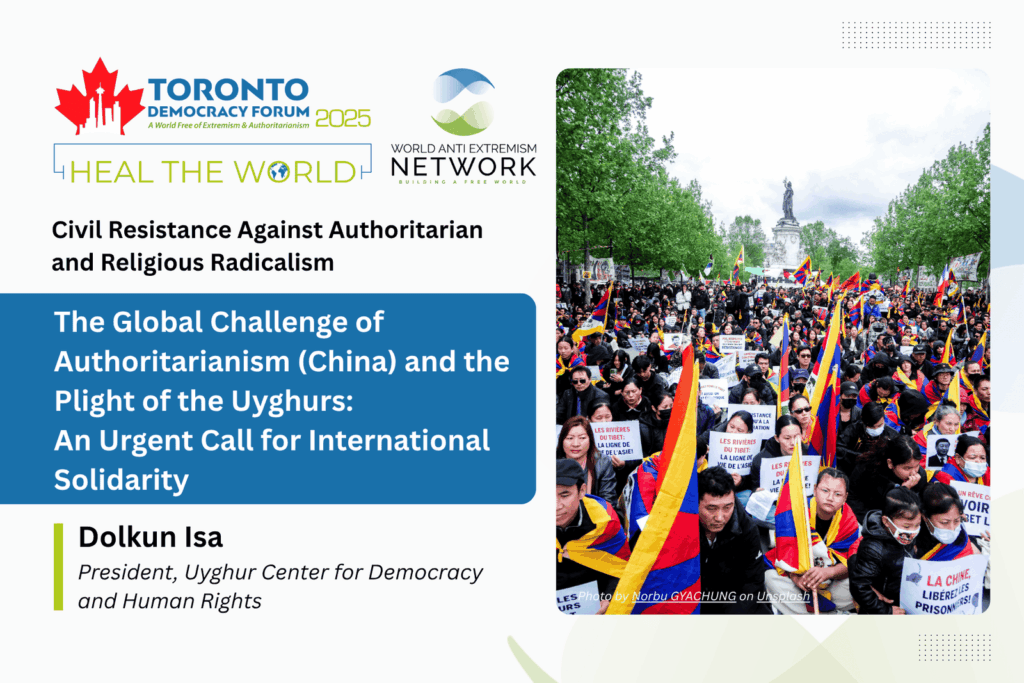
The plight of the Uyghur people in East Turkestan (Xinjiang) illustrates the extreme measures used by authoritarian regimes to suppress ethnic and religious identity. Dolkun İsa, who is the President of the Uyghur Center for Democracy and Human Rights, examines the nonviolent resistance led by Uyghur activists, centering his own experience as the founding and former President of the World Uyghur Congress. The paper explores the significant obstacles faced by activists, including censorship, surveillance, and transnational pressure, while highlighting how engagements with global leaders and rights organizations can amplify nonviolent movements and build international solidarity. Placing Uyghur efforts alongside other everyday resistance movements, it draws practical lessons about strategy, resilience, and the global interconnections of civil resistance.
In this piece of writing, Dolkun İsa’s combination of personal testimony and analytic reflection provides a very clear, grounded perspective on the stakes and possibilities of peaceful struggle against authoritarianism.