

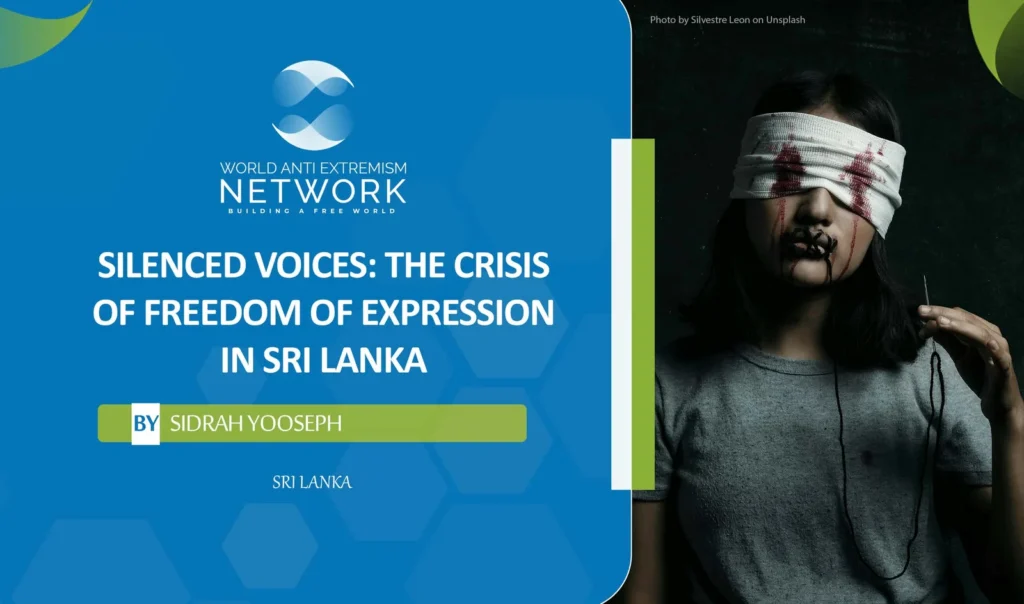
Freedom of expression is essential in any democratic society. It allows individuals and the media to hold governments accountable, fosters transparency, and enables a free exchange of ideas. However, in recent years, Sri Lanka has seen a troubling decline in these freedoms, with restrictive government policies and societal tensions leading to an environment where expression is increasingly curtailed. This article explores the challenges facing freedom of expression in Sri Lanka, examining the legal and societal constraints that impact it and suggesting potential solutions to restore and protect this fundamental right.
The Current Landscape of Freedom of Expression
The right to freedom of expression is enshrined in both international human rights law and Sri Lanka’s constitution under Article 14. However, the reality is starkly different. Following the end of the civil war, the Sri Lankan government has systematically undermined this right through various means, including restrictive laws, intimidation of journalists, and the silencing of dissenting voices. Enacted during the civil war, the Prevention of Terrorism Act (PTA) grants the state extraordinary powers to detain individuals without charge for long periods, effectively bypassing due process. Though initially intended to curb violent extremism, the act has increasingly been used to detain activists, journalists, and critics of the government, drawing criticism from human rights groups.
Reporters Without Borders (RSF) has ranked Sri Lanka 150 out of 180 countries in its 2024 World Press Freedom Index, significantly declining from its 2023 ranking of 135. This downward trend highlights the deteriorating environment for journalists and media outlets in the country.
The case of Prageeth Eknaligoda, a journalist who disappeared in 2010 after criticizing the government, underscores the risks faced by those who dare to speak truth to power. His disappearance remains unsolved, a chilling reminder of the consequences of dissent in Sri Lanka.
Authoritarian Policies and Their Impacts
The government’s approach to dissent has intensified during periods of national crisis, particularly in response to the recent economic turmoil. In 2022, as Sri Lanka faced a severe economic crisis, widespread public protests erupted. In response, the government enacted emergency regulations that granted the police and military sweeping powers to arrest and detain protesters. The response was swift and harsh, with reports of excessive force being used against civilians, which was widely condemned by human rights organizations and observed as a clear attempt to quell any opposition.
Furthermore, the government’s control over media outlets has intensified. State-run media dominate the narrative, often portraying dissenters as threats to national security. This control not only limits access to diverse perspectives but also creates an environment where misinformation can thrive, further endangering the public’s right to informed decision-making.
Societal Impact: Fear and Self-Censorship
For journalists, activists, and ordinary citizens, the impact of these policies extends beyond legal constraints to personal and professional lives. High-profile incidents, such as the assassination of prominent journalist and human rights activist Lasantha Wickrematunge in 2009 and the abduction of other journalists who reported critically on government affairs, exemplify the risks faced by those who challenge the status quo. Cases like these create the effect, leading many in the media to self-censor, either avoiding sensitive topics or downplaying critical reporting to avoid retribution.
The Committee to Protect Journalists (CPJ) and Reporters without Borders (RSF) have documented an ongoing hostile environment for media workers. They reported that such instances of intimidation and violence are not isolated but reflect a systematic trend where dissent is repressed through both direct violence and subtle threats. This impacts public discourse, making it difficult for citizens to obtain balanced perspectives on issues that affect their lives.
Evidence of Systematic Violations
Several human rights organizations have documented systematic violations tied to the suppression of free speech and other civil liberties in Sri Lanka For instance, in a report by the United Nations Office of the High Commissioner for Human Rights (OHCHR), instances of protesters and journalists facing arbitrary arrest and detention were highlighted, especially during the economic crisis protests where the government resorted to a heavy-handed response, including the deployment of military forces against civilians. The report noted that “the frequent misuse of security laws such as the PTA to suppress dissent” violated international human rights obligations.
In addition, the Asian Human Rights Commission recorded an increase in politically motivated arrests, with the PTA being cited as a primary tool for these actions. Such detentions are rarely subject to independent judicial oversight, undermining the principles of a fair legal system and contributing to a growing mistrust of the state’s commitment to human rights.
Recommendations for Addressing Human Rights Violations
Addressing human rights violations in Sri Lanka requires a multi-faceted approach that focuses on legal reform, protection for journalists, engagement with civil society, and international support. First, it is crucial that restrictive laws, particularly the Prevention of Terrorism Act (PTA), be reformed or repealed to prevent misuse against those exercising their freedom of expression. Aligning these legal frameworks with international human rights standards would mitigate arbitrary detentions and censorship practices. Additionally, stronger protections for journalists and activists are essential, as they face risks of harassment and violence while reporting or advocating for rights. Creating mechanisms for reporting abuse and ensuring accountability can help create a safer environment for these individuals, enabling a free press and fostering transparency.
Civil society engagement plays an equally vital role in upholding rights and encouraging dialogue between the public and the government. A robust civil society can act as a watchdog, holding authorities accountable for actions that infringe on citizens’ freedoms and promoting a culture of transparency. Finally, international involvement, including support from human rights organizations and governments, remains essential. The international community can exert pressure on Sri Lanka to honor its human rights commitments by providing resources and oversight, which encourages adherence to global human rights standards. Through these collective efforts, Sri Lanka can build a more secure foundation for freedom of expression and ensure that all citizens can voice their concerns without fear of retribution.
Conclusion
Sri Lanka’s struggle with freedom reflects broader trends toward authoritarianism, undermining democratic principles that are essential for a free and just society. The government’s systematic approach to stifling dissent has not only curtailed civil liberties but has created a climate of fear and repression that affects all levels of society. However, with reform, particularly in laws like the PTA, stronger protections for journalists, active civil society engagement, and sustained international support, Sri Lanka has the potential to restore its democratic values and protect the rights of its citizens.
By taking these measures, Sri Lanka can begin to rebuild public trust and ensure that the voices of all citizens can be heard without fear of reprisal. In a true democracy, the right to speak freely and openly is non-negotiable; only by respecting this right can Sri Lanka hope to secure a stable, democratic future.