

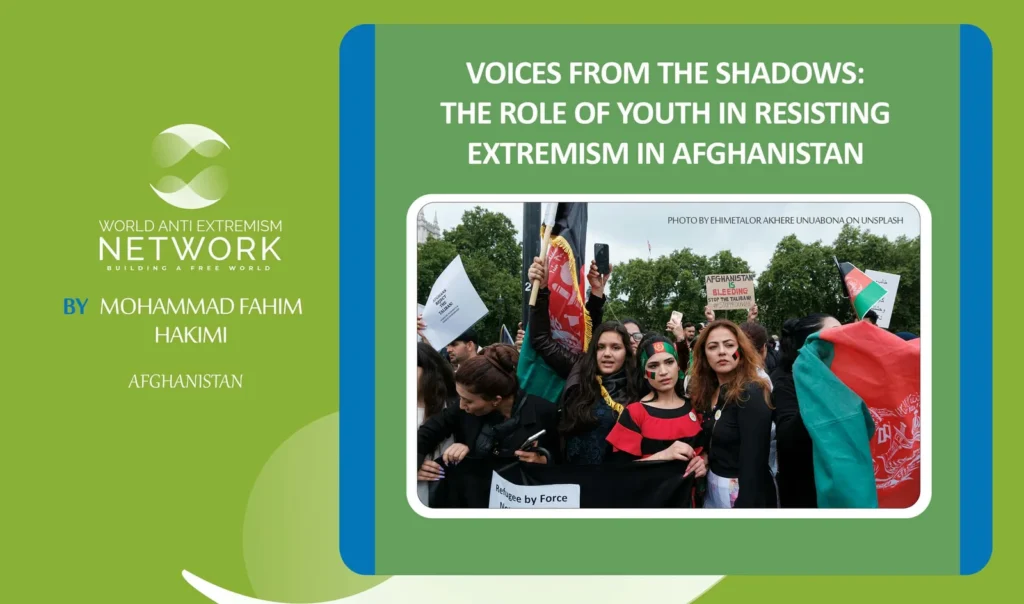
Introduction:
In a country where dreams are often overshadowed by despair, the voices of Afghan youth resonate with a powerful longing for change, opportunity, and a brighter tomorrow. Afghanistan has faced unprecedented challenges in recent years that have reshaped its political, social, and economic landscape. Following decades of conflict and instability, the country is now at a critical juncture, particularly concerning its younger population, which constitutes a significant portion of its demographic makeup. With approximately 63% of Afghanistan’s population under the age of 25, understanding the aspirations, challenges, and conditions faced by Afghan youth is essential for grasping the broader implications of the current situation.
The return of the Taliban to power in August 2021 has led to sweeping changes in governance, human rights, and access to education and employment opportunities. These developments have profound implications for the youth, who are not only the future leaders of Afghanistan but also the key to its potential recovery and growth. However, reports indicate that many young people are facing increasing restrictions on their freedoms, particularly girls and women, who have seen their rights severely curtailed.
This Article aims to explore the current situation in Afghanistan with a focus on youth demographics, examining the impact of political changes on young people’s lives and their prospects for the future. By analyzing recent data and reports from various organizations, this study will highlight the urgent need for targeted interventions to support Afghan youth during this tumultuous period.
Demographics and challenges faced by young people in Afghanistan:
Afghanistan’s youth population is among the highest in the world with approximately 63 percent of the population (27.5 million Afghans) below 25 years of age and 46 percent (11.7 million children) under 15 years, they grapple with issues such as limited access to education, high unemployment, poverty, child marriage, early pregnancy, gender-based violence, and escalating mental health concerns due to prolonged conflicts and restricted access to essential services. To strengthen humanitarian responses, it is essential to recognize and cater to the specific needs of these young individuals, empowering them with skills and resources to reduce dependency on international aid, enhance effectiveness, and fortify community resilience in Afghanistan.
The impact of political changes on Afghanistan youth:
Afghan women, girls, and youth face severe setbacks under the Taliban, who have imposed restrictive policies despite previous assurances of moderation. Since returning to power, the Taliban has banned secondary education for girls, limited women’s freedom of movement, and ordered female government employees to stay home or be replaced by male relatives, regardless of qualifications. They banned the Ministry of Women’s Affairs, replacing it with the Ministry of the Propagation of Virtue and Prevention of Vice, which now enforces oppressive mobility, education, and employment measures.
Economic hardships have worsened, pushing Afghan families toward child labor and early marriages to survive. With widespread poverty, many youths lack access to school or job opportunities, leaving them vulnerable to recruitment by extremist groups. The Taliban’s control over school curricula, replacing standard lessons with their version of Sharia teachings, threatens the quality of education, leading to long-term consequences for Afghan stability.
Malnutrition and food insecurity are rampant, stunting the physical and mental development of Afghanistan’s younger generation. Formerly hopeful young Afghans, particularly educated scholars and activists, now live in fear and face declining opportunities, limited freedom, and systemic discrimination that threatens to erase the progress made over the past two decades.
Exploring the various ways for Afghan People Resist oppression:
Afghans resist Taliban oppression not through protests but by adapting and surviving, an enduring form of resilience rooted in decades of foreign control—from the Soviets to the U.S. to the Taliban. Their focus is not on political revolution but on securing basic needs, guided by tribal affiliations that provide stability beyond any central rule. In Afghanistan, survival becomes its form of protest, as people prioritize daily life over confrontation with an unforgiving regime. This approach contrasts with Western ideas of resistance, where change is sought through collective action, highlighting a unique, culturally grounded form of resilience.
Youth Activism and Social Movements:
Afghan girls and young women are banned from continuing their education beyond primary school (ages 11-12). But, undeterred, women such as Afghan activist and human rights defender, Pashtana Durrani, continue to provide education for hundreds of girls in Afghanistan who are desperate to learn despite the current ban on them attending school. Durrani’s organization, LEARN Afghanistan, offers online courses, with many taking place in rooms with computers hooked up to generators, all in secret locations to avoid Taliban detection. “I get more than 10 messages on social media every day asking about courses for girls. Since the university ban, I have been getting another dozen requests for starting university-level online courses,” she said.
Case Studies:
Rukhshana Media was created to give voice, dignity, and support to the amazing women of Afghanistan, who, despite living under the Taliban, are determined not to be silenced by the most oppressive regime in the world. In a society that increasingly denies women’s basic rights, such as the freedom to choose their clothes, study, work, and now even speak outside the house, Rukhshana’s extraordinary team of women journalists and contributors work in secret, under the constant threat of harm and death, to report on and investigate issues related to the lives of Afghan women today. Rukhshana’s courageous team is led by fearless editor-in-chief Zahra Joya. As a child during the first Taliban regime, Zahra disguised herself as a boy to be able to attend school. Forced to flee Afghanistan as the Taliban returned to power in 2021, Zahra tirelessly continues to fight for Afghan women’s rights through her rigorous and uncompromising journalism. In 2022, she was named Time’s Woman of the Year for her work with Rukhshana Media.
Why the name Rukhshana?
Rukhshana was the woman who was brutally killed for choosing to leave a forced marriage and for choosing to live with someone she loved. It was October 2015 when a 30-second video that depicted the last moments of a young woman surfaced on Afghan social media. She was placed in a pit at a hillside near Firuzkuh, the capital of Ghor province. A group of men who surrounded her, aimed her body with stones. The video shows her last moments as she falls into death.
The newsroom is named Rukhshana in her memory and to remind of the depth of gender inequality in Afghanistan, where women are killed over trying to make decisions about their bodies and their private lives.
Afghan Youth in the Shadow of Taliban Control:
The Taliban’s rapid takeover of Kabul on August 15, 2021, shocked Afghan citizens, especially youth, who had anticipated peace. Instead, the country now faces a severe economic crisis, with nearly 97% of the population at risk of poverty. Infrastructure is crumbling, extremism is rising among the younger generation, and youth face heightened vulnerability. Many academics, journalists, and former government employees remain trapped, fearing for their safety despite Taliban promises of non-retaliation.
Faisal stated: Many people, especially the youth, left the country. Those who are still in the country face challenges such as lack of access to education, being jobless, and not having the basic life needs for themselves and their family members.
Muska described life under Taliban rule: “Being inside Afghanistan is like being in a grave, not even jail. I am just breathing, not living.
Activist Fatima Roshanian commented, “The Taliban regime is like a dictatorship, which leaves no space for democratic activities and values.
Abdul Naser Folad added, “The concept of civic participation has no more meaning. It has lost its meaning because, in this regime, we are not citizens anymore; we are only servants of the Taliban’s vision.
Conclusion:
The resilience of Afghan youth remains a powerful testament to their determination amid extreme adversity. The Taliban’s return to power has stripped young Afghans of fundamental rights, particularly affecting women and girls, who face restrictions on education, employment, and freedom of movement. The broader youth population, grappling with poverty, food insecurity, and lack of opportunities, faces a future where survival becomes the ultimate form of resistance.
Despite these challenges, Afghan youth persist, drawing strength from cultural and tribal affiliations that provide stability beyond any regime’s rule. For Afghanistan to progress, it is essential for the international community to recognize the struggles of this generation and to support initiatives that empower them to shape a brighter future.