

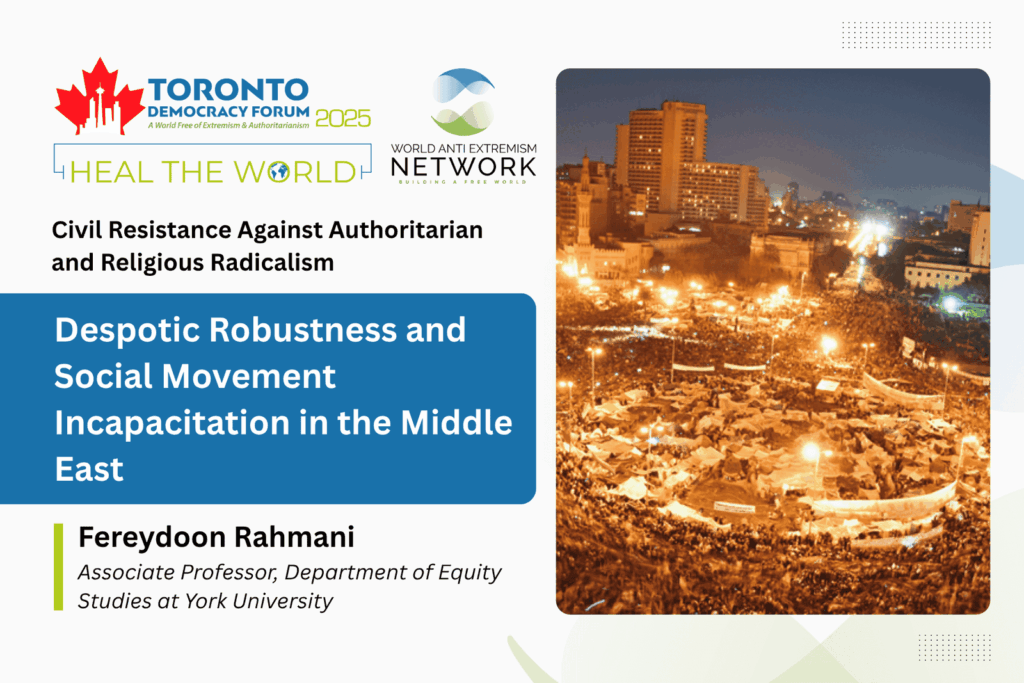
Across the Middle East, people have risen again and again, in Iran, Iraq, Libya, Syria, and across the Arab world, yet these powerful uprisings have rarely led to lasting political change. The core problem is that why do authoritarian regimes survive despite constant waves of resistance? Dr. Fereydoon explains that these regimes endure not just through force but through a system designed to control society and several other reasons. Real political openings only emerge when regimes are weakened, when security forces fracture, foreign support declines, or major crises shake the system. But even then, uprisings succeed only if they are organized and capable of building institutions that last.
His work offers a clear, timely understanding of why revolutions in the region so often fall short, and what it will take to finally turn protest into real change.