

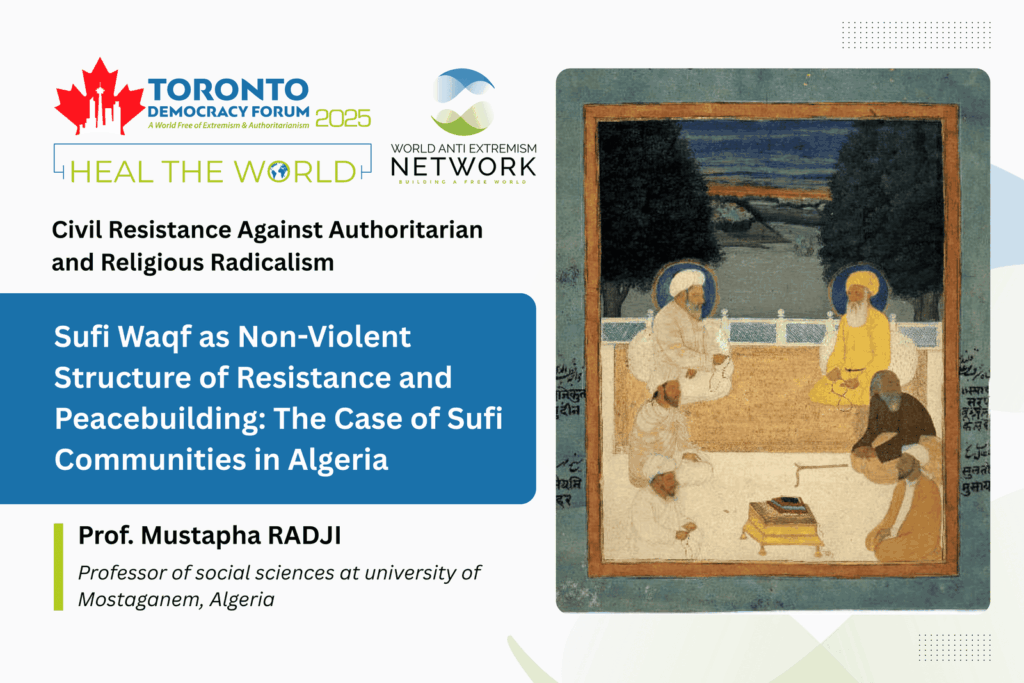
When the discussion of civic resistance comes up, several civic institutions are mentioned. Sufi waqfs are one among them, which are acting as durable community anchors that mediate authority and social life. This paper is articulated by Mustapha Radji, Professor at the University of Mostaganem, Algeria, in which he examines how these waqfs, with a special focus on the Alawiyya Sufi order, have functioned as peaceful engines of civic resistance and peacebuilding across changing political landscapes. He argues in this paper that clearer foundation laws and stronger legal protections would unlock waqfs’ full potential as credible partners in countering both authoritarianism and violent radicalism.
The paper serves as the historical evidence and concrete policy steps that make that case, a concise roadmap for anyone interested in how indigenous civic institutions can sustain pluralism and non-violent civic engagement.