

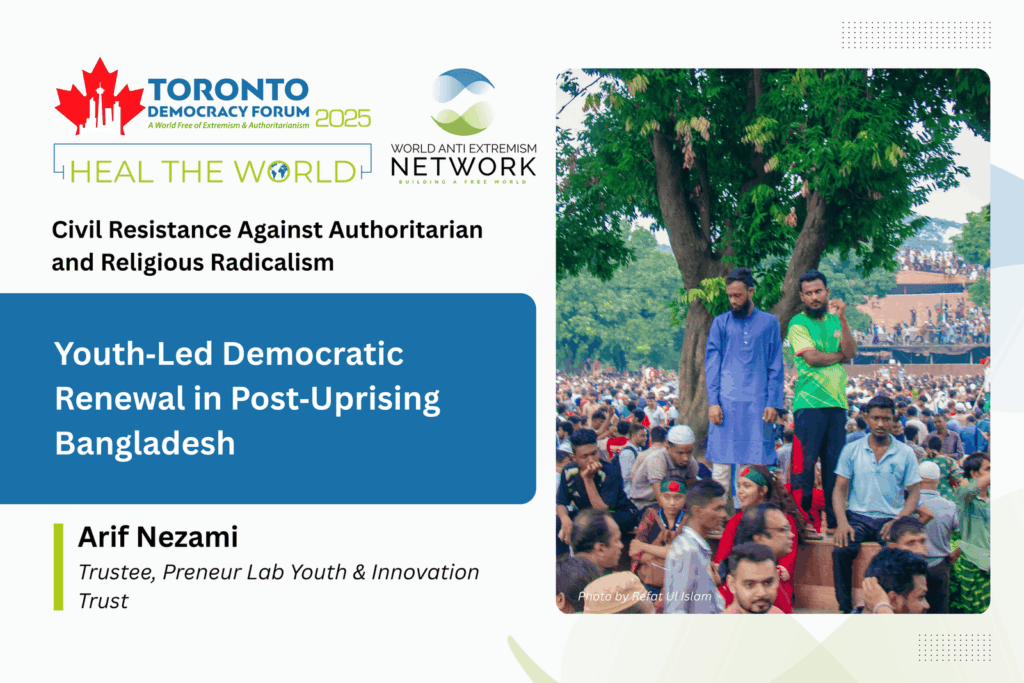
In July -August 2024, Bangladesh experienced the “July 36 Uprising,” which was a month-long, student-led movement that began with protests against a contested government job-quota system and grew into nationwide demands for accountability, meritocracy, and justice. A harsh state crackdown resulted in significant casualties and detentions and culminated in the regime’s collapse on August 5, 2024, creating an opening for democratic reform.
This paper is written by Arif Nezami, a Trustee at Preneur Lab Youth & Innovation Trust, and he examines the post-uprising reform process, showing how youth networks and civic-tech initiatives have converted protest momentum into policy engagement, institutional transparency, and participatory governance, making this paper an insightful reflection on how a movement became a roadmap for reform.